


LyricFluent: Learn Spanish
4.8142.00 Reviews
App Specs
- Version
- 3.369.0
- Updated On
- License
- Free
- Downloads
- 100,000+
- Developer
- LyricFluent
- Categories
- Education
- Platform
- Android
Screenshots
 Analysis by AppCompare
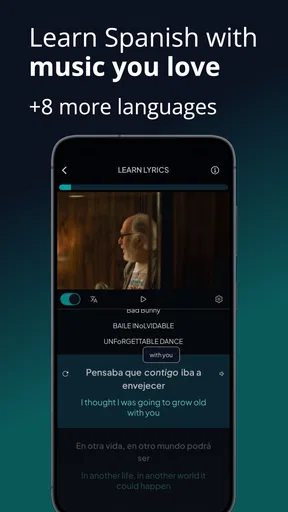
Learning a language through songs sounds easy until the first week ends and the novelty has to carry you into a real habit. I approached LyricFluent: Learn Spanish with that question in mind: does it become a useful part of everyday study, or is it simply entertaining for a few sessions? My experience is that it has a genuinely appealing starting point, especially for learners who already replay music in Spanish, but its lasting value depends on how deliberately you use it.
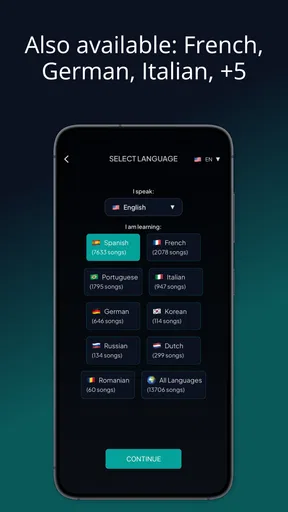
This is an education app from LyricFluent, focused on learning Spanish with music and lyrics while also offering Portuguese, French, Korean and other languages. It is free to start, with optional in-app purchases ranging from $3.99 to $69.99 per item. That makes it easy to try without committing immediately, although anyone planning to use it regularly should pay attention to which parts of the experience remain available without paying.
How LyricFluent fits into a lasting language-learning routine
I look at long-term use as a matter of giving each return to a song a fresh purpose, rather than simply replaying it and hoping familiarity turns into fluency. A useful routine can stay small: I might listen for one phrase today, then try to recall or reuse it the next time I open the app. That approach also makes it easier to judge whether this style of practice genuinely fits my life.
The first week feels different from a normal lesson
The strongest early appeal is the change of context. Instead of opening a conventional lesson built around isolated vocabulary or artificial dialogues, I can approach Spanish through lyrics, rhythm and repetition. A song gives each phrase an emotional setting, and that makes certain expressions easier to remember than a disconnected word on a flashcard.
I found this especially useful for learners who struggle with the feeling that textbook Spanish is separate from real life. Music exposes you to language as it is experienced: phrases arrive in sequence, pronunciation flows between words, and meaning depends on the surrounding line. Even when I did not understand every sentence, the repeated chorus gave me a natural anchor for noticing familiar words.
The app is also less intimidating for a casual first session. You do not need to reserve a full study period to get something from it. A short listening session can fit into a commute, a break, or the few minutes before bed. That low entry cost matters because the biggest obstacle for many beginners is not a lack of learning material; it is failing to begin consistently.
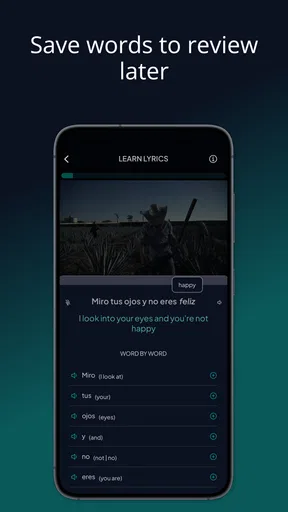
My most useful first-week approach was not to treat every song as a complete lesson. I listened once for the general mood, then returned to the lyrics and selected a small number of phrases that seemed worth remembering. Trying to translate everything immediately made the activity feel like homework. Choosing a few lines kept the music enjoyable while still giving the session a clear learning purpose.
Worth Reading Before You Choose

EA SPORTS FC Mobile 26 Is a Bigger Football Game, but It Takes Time

Flipboard Shows What News Apps Must Do Beyond the Feed

Switching to Android Auto Means Rethinking Your Driving Routine

Google Calendar Makes a Crowded Week Easier to Manage

Ludo King Makes the Most of the Minutes Between Plans

Baby Panda World Brings Quick Play to Modern Phones, but Its Game Library Feels Busy
That distinction is important. LyricFluent can make exposure more enjoyable, but enjoyment alone does not guarantee progress. If you simply let songs play in the background, you may become more familiar with their sound without building reliable recall. The app works best when listening is followed by some active attention, even if that attention lasts only a few minutes.
What the music-based format teaches well
Songs are particularly good for helping me notice pronunciation, connected speech and recurring sentence patterns. A lyric that initially sounds too fast becomes more understandable after several listens. This can build confidence before a learner is ready for ordinary conversations, where there is no chorus waiting to repeat the same phrase.
There is also a useful emotional advantage. When a word appears in a song I genuinely enjoy, it gains a memory cue that a standard vocabulary list cannot easily provide. Later, hearing the melody can bring the phrase back. That does not replace structured study, but it can make vocabulary feel less disposable.
Another practical benefit is the possibility of learning phrases rather than only individual words. Beginners often know a collection of nouns but hesitate when they need to form a sentence. Lyrics can show how words sit together, which is more useful than memorizing a translation with no surrounding structure.
Still, music has limits as a language model. Lyrics may be poetic, abbreviated or shaped by rhythm, and they are not always the clearest examples of everyday conversation. I would not use a song lyric as the only evidence that a phrase is appropriate in a formal situation. I treat the app as a bridge into Spanish listening and expression, not as a complete grammar course or a substitute for conversation practice.
Turning a pleasant session into actual practice
The first concrete workflow I recommend is the “listen, notice, return” cycle. I listen once without stopping, return to the lines that caught my attention, and then hear the song again while trying to recognize those lines before they arrive. This turns passive listening into prediction. Prediction is valuable because it tests whether I can retrieve the language rather than merely recognize it on the screen.
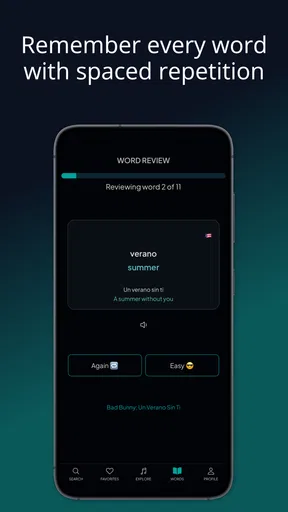
A second workflow is to keep a very small personal phrase list. I would write down only expressions I can imagine using or recognizing again, then revisit them during the next session. A long list quickly becomes another neglected study project. A short list tied to a song is easier to maintain and gives each return visit a purpose.
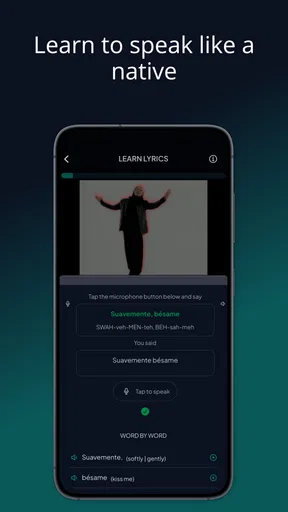
A third useful habit is to separate pronunciation practice from meaning work. On one pass, I focus on the sound and rhythm, repeating a line quietly or aloud. On another, I focus on what the line means. Trying to solve pronunciation, vocabulary and grammar simultaneously can make a song feel unnecessarily difficult, especially for a beginner.
Does it still help after the first month?
After the initial excitement fades, LyricFluent’s value comes from how well it supports repeated contact with Spanish. Music is naturally repeatable, so the same material can return without feeling exactly like a repeated textbook exercise. That is the app’s best argument for long-term space on a phone: it can turn songs you already want to hear into recurring language exposure.
However, the app does not automatically create a complete progression from beginner to confident speaker. The learner has to provide some structure. I would pair it with a separate grammar reference, a writing habit or regular conversation practice, depending on the goal. Someone preparing for an exam may need a more systematic curriculum, while someone trying to understand Spanish music and become more comfortable hearing the language may find this format more satisfying.
The month-to-month question is therefore not simply whether the catalog remains interesting. It is whether I can keep extracting new value from material I have already encountered. Replaying a song can improve recognition and pronunciation, but only if I occasionally change the task. One session might focus on listening, another on phrases, and another on singing or repeating lines. Without that variation, familiar tracks can become background noise.
I also think the app is better suited to maintenance than to intensive catch-up. If I already have basic Spanish and want regular contact between more formal study sessions, music provides a pleasant way to keep the language present. If I need to build a foundation quickly from zero, I would want a more explicit sequence of lessons alongside it.
Where the free model helps and where it may interrupt momentum
The free price makes experimentation straightforward. I can see whether learning through lyrics matches my personality before spending anything. That is a real advantage over buying a course based only on a promising description. The age rating of Everyone 10+ also makes the app approachable for a broad audience, including younger learners who enjoy music-based practice.
At the same time, optional purchases can affect the feeling of continuity. A learner who has built a routine around particular material may be disappointed if the most useful part of that routine becomes tied to an upgrade. I would spend time with the free experience first, then decide whether the paid options support a habit I am actually keeping. Paying for access before establishing regular use is rarely a good language-learning investment.
The range of individual purchase prices is wide, so the decision deserves a little care rather than an automatic upgrade. The right question is not whether a larger option sounds comprehensive. It is whether I will return often enough for that option to reduce friction or add meaningful practice. For occasional listening, free access may be enough. For frequent, focused use, a purchase could make more sense if it removes a barrier I encounter repeatedly.
The maintenance burden is low, but not zero
LyricFluent is easy to maintain in the sense that it does not demand a large block of time. I can attach it to an existing listening habit instead of creating an entirely new schedule. That is helpful for people who abandon language apps because their ideal study plan is too ambitious for ordinary life.
The hidden maintenance burden is attention. Music encourages multitasking, and it is very easy to claim that I studied when I only listened. To keep the app useful, I need a small rule: every listening session should include one active action. I might repeat a phrase, identify a familiar verb, write one sentence using a new expression, or listen again without looking at the lyrics.
This is where the app earns or loses its place over time. It does not need an elaborate routine, but it does need a deliberate one. Five attentive minutes can be more valuable than a much longer session in which the music remains unnoticed.
Device compatibility is also worth checking before building a routine around it. The app supports Android 7.0 and later, so it is available on a wide range of Android devices, including older phones that may not run newer education tools comfortably. For iOS readers, I would verify the current App Store availability and device requirements before planning a regular setup, since the experience can differ between platforms.
What may cause fatigue after the novelty fades
The first source of fatigue is repetition without progression. Replaying songs is useful, but eventually I need a reason to return beyond simply hearing the same chorus again. If the app does not become part of a broader personal plan, the experience can settle into entertainment rather than study.
The second is the unevenness of song-based language. Some tracks are excellent for repeated phrases and listening confidence, while others may be too fast, too figurative or too dependent on cultural context for a beginner. A learner who expects every song to function like a carefully graded lesson may become frustrated. I would choose material based on clarity and personal interest, not only on whether I like the performer.
The third is the temptation to measure progress by recognition alone. Understanding a line after hearing it many times feels encouraging, but that does not necessarily mean I can produce it in a new situation. To test real progress, I occasionally close the lyrics and try to summarize the song’s idea, repeat a phrase from memory, or use a learned expression in an original sentence.
There is also a practical trade-off between enjoyment and precision. Slowing down, pausing and examining a line can improve learning, but too much interruption removes the pleasure that makes music motivating in the first place. I prefer alternating modes: one relaxed listen for enjoyment, followed by a short focused review. That keeps the app from becoming either empty background audio or exhausting analysis.
Who will get the most from it?
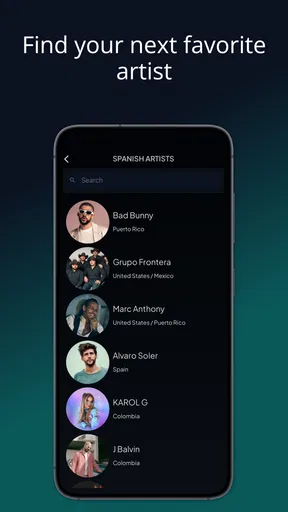
I would recommend LyricFluent to beginners who are motivated by music, learners who want more listening exposure, and intermediate students looking for a pleasant way to keep Spanish active. It is particularly suitable for someone who already has a few favorite Spanish-language artists and wants to turn repeated listening into a modest but consistent learning opportunity.
It can also work well for a busy learner who dislikes rigid schedules. A song-based session is easier to fit around daily life than a formal lesson, and the emotional connection to music can make returning feel less like an obligation. Parents or teachers looking for a more engaging supplement for learners aged ten and above may also find the approach appealing, provided they add guidance around grammar and context.
I would not choose it as my only tool if I needed a complete beginner curriculum, detailed grammar explanations, writing correction or live speaking feedback. A traditional course, tutor or conversation-focused service would be a better primary option in those cases. Likewise, learners who do not enjoy music may find the central format distracting rather than motivating.
How it compares with ordinary language apps
Compared with flashcard apps, LyricFluent gives vocabulary a stronger sound and emotional context, but it may offer less controlled repetition. Flashcards are better when I need to target a specific word set and test recall directly. LyricFluent is better when I want language to arrive in connected phrases and authentic-feeling listening.
Compared with grammar-centered courses, it feels more inviting but less systematic. A course can show me a planned sequence of verb forms and sentence structures. Music can show me how language sounds when it is carried by rhythm and emotion. I see the two approaches as complementary rather than competing.
Compared with passive streaming, the app adds a learning intention to something I might already do. That is its clearest everyday advantage. It does not need to replace music services or formal study; it can sit between them, making familiar listening more active without demanding a complete change in lifestyle.
My long-term verdict
LyricFluent earns lasting space more easily as a maintenance tool than as a standalone Spanish program. Its first-week appeal is real, and its strongest long-term quality is that it gives repeated listening a purpose. When I use a short, focused workflow, the app helps me notice pronunciation, remember phrases and stay connected to Spanish between more structured sessions.
Its weaknesses are equally clear. Music can be irregular, passive listening can disguise a lack of progress, and repetition needs occasional variation. The optional purchase model also means I would test the free experience carefully before paying. None of these issues makes the app poor, but they do define the kind of learner who will benefit most.
The app has a 4.8 average from around four thousand ratings and has passed one hundred thousand installs, which suggests that its approachable idea has connected with many users. It was released on June 3, 2022, and the current version is 3.369.0. Those details place it in the category of an established, actively presented learning option rather than a fleeting experiment.
My recommendation is simple: use it as a small recurring appointment with Spanish, not as a promise of effortless fluency. Pick a song, listen for pleasure, return for one phrase, and test that phrase away from the lyrics. If that routine feels natural, the app can remain useful long after the novelty of learning through music wears off. If you want a complete, measurable course with tightly controlled progression, choose a more structured companion and let LyricFluent handle the part that conventional lessons often miss: making you want to hear the language again.
Pros
- Short lyric-based lessons make Spanish practice feel engaging.
- Songs provide memorable context for learning everyday vocabulary.
- Listening exercises help improve recognition of natural Spanish pronunciation.
- Progress tracking makes it easier to maintain a regular study routine.
- Useful for learners who prefer music and entertainment over textbooks.
Cons
- The song selection may not appeal to every learner’s musical taste.
- Some features or lessons may require a paid subscription.
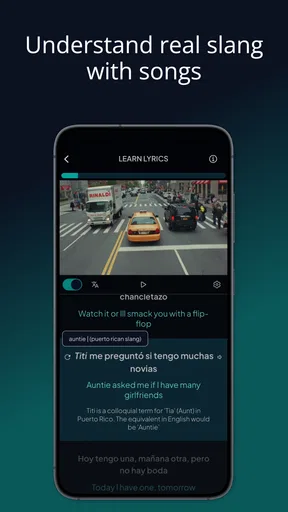
- Lyrics can include slang that beginners may find difficult to understand.
- It may not provide enough structured grammar practice for advanced learners.
- Learning through songs alone is unlikely to build complete conversational fluency.
FAQs for LyricFluent: Learn Spanish
What is LyricFluent: Learn Spanish, and how does it help with language learning?
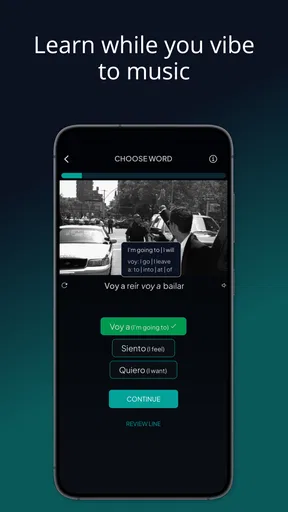
LyricFluent: Learn Spanish is an educational app that uses Spanish songs and lyrics as the foundation for language practice. Instead of relying only on traditional vocabulary lists, it lets learners follow lyrics, identify missing words, review translations, and listen repeatedly to improve comprehension. This approach can make everyday expressions, pronunciation, and listening practice feel more engaging and memorable.
Is LyricFluent: Learn Spanish suitable for complete beginners?
The app can be useful for beginners, especially those who want a relaxed introduction to Spanish pronunciation, common words, and simple phrases through music. However, song lyrics may include slang, shortened expressions, or grammar that is more advanced than expected. New learners may benefit from using the app alongside a structured Spanish course rather than treating it as their only source of lessons.
Does LyricFluent: Learn Spanish require an internet connection?
An internet connection may be needed to browse available songs, load lyric content, stream audio, and synchronize learning progress, depending on the specific feature and device settings. Users should check whether selected lessons can be saved for offline use before traveling or studying without mobile data. Availability of songs and functions may also vary between Android and iOS versions.
Is LyricFluent: Learn Spanish free to use?
LyricFluent: Learn Spanish may offer free access to some learning content while reserving additional songs, exercises, or features for in-app purchases or a subscription. Before downloading, review the current store listing for pricing, trial conditions, renewal terms, and any limitations on free lessons. Subscription details can change, so confirm them directly in the app or app store.
Can LyricFluent: Learn Spanish improve speaking and pronunciation?
The app is primarily focused on listening, reading, vocabulary, and understanding Spanish through music. Replaying lyrics can help users notice pronunciation, rhythm, and connected speech, while singing along may build confidence and accent awareness. Nevertheless, it may not provide detailed speaking feedback or conversation practice, so learners should combine it with pronunciation exercises and real interaction in Spanish.


